15 Small Kitchen Ideas for Apartments
Living in an apartment with a tiny kitchen doesn’t mean you have to sacrifice style or functionality—honestly, some of the most charming kitchens I’ve seen have been in compact spaces where creativity really gets to shine. Whether you’re dealing with limited counter space, barely-there storage, or a galley layout that feels more like a hallway, there are so many clever ways to make your small kitchen work harder while looking absolutely gorgeous. From vertical storage solutions and multi-purpose furniture to color tricks that open up the space and organizational hacks that’ll change your cooking life, these ideas prove that small kitchens can be just as dreamy as their sprawling counterparts.
I’ll never forget my first apartment kitchen—it was so small that I could literally touch both walls while standing in the middle, and the “counter space” was basically nonexistent. But you know what? That tiny kitchen taught me so much about being intentional with every single inch of space. I learned to think vertically, to choose pieces that pulled double duty, and to embrace the cozy charm of a compact cooking space instead of fighting against it. There’s something really special about a well-designed small kitchen; it feels efficient and intimate, like everything you need is right at your fingertips without any wasted steps or unnecessary extras.
The best part about decorating and organizing a small apartment kitchen is that you don’t need a massive budget or a complete renovation to make a huge impact. Sometimes it’s the smallest changes—a new shelving unit here, a fresh coat of paint there, some strategic lighting—that completely transform how a space feels and functions. I’ve collected these ideas from years of apartment living, countless Pinterest saves, and conversations with friends who’ve mastered the art of small-space living. Each one is designed to help you maximize every inch while creating a kitchen that feels warm, welcoming, and completely yours.
1. Open Shelving Instead of Upper Cabinets
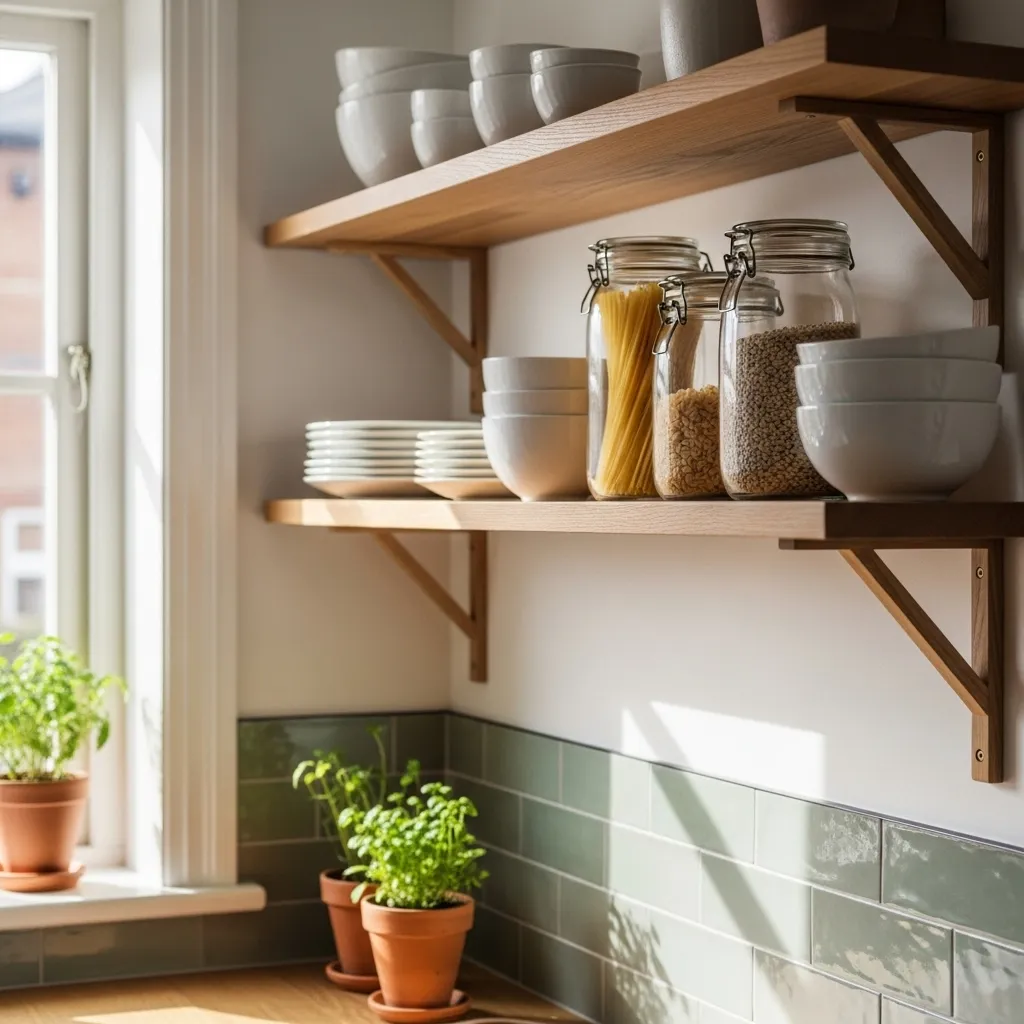
Replacing bulky upper cabinets with open shelving is one of those changes that can make a small kitchen feel so much more spacious and breathable. I was nervous about this at first because I thought it would make the kitchen feel cluttered, but the opposite happened—suddenly I could actually see the wall behind my dishes, and the whole room felt bigger. The key is keeping what you display relatively minimal and cohesive, so it looks intentional rather than chaotic. You don’t need matching everything, but choosing a general color palette for your dishes and storage containers makes such a difference in how pulled-together it all looks.
Open shelving also forces you to be more mindful about what you’re keeping in your kitchen, which is honestly a good thing when you’re working with limited space anyway. I found myself getting rid of mismatched mugs I never used and those random plastic containers without lids, keeping only the pieces I genuinely love and reach for regularly. Plus, there’s something really homey about seeing your favorite bowls and pretty jars of ingredients on display—it makes the kitchen feel more like a lived-in space rather than just a functional room. If you’re worried about dust, just keep everyday items on the lower shelves and less-used pieces up higher.
2. Rolling Kitchen Cart for Extra Counter Space
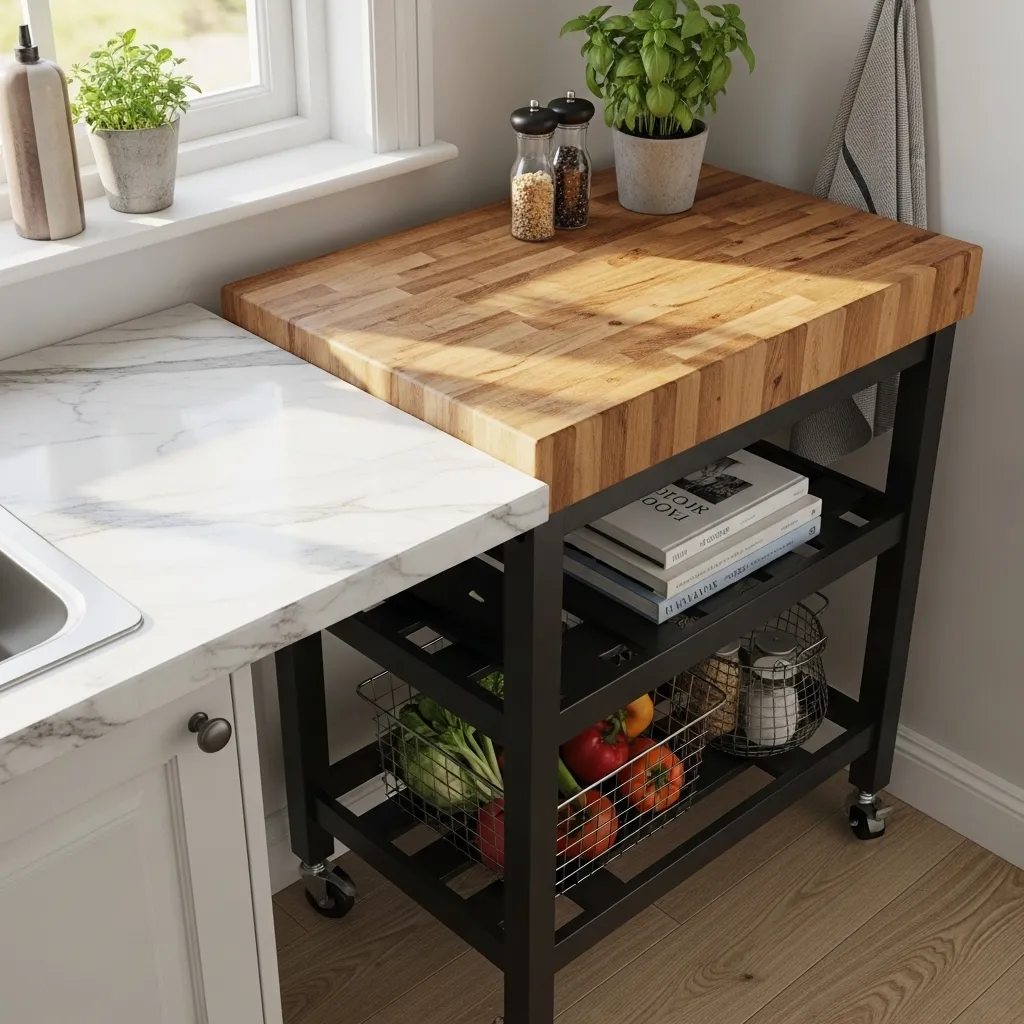
A rolling kitchen cart has been an absolute game-changer in every small apartment kitchen I’ve ever had—it’s like having a sidekick that goes wherever you need extra space. On a regular day, I keep mine tucked against the wall serving as additional counter space and storage, but when I’m cooking something involved or having people over, I can roll it right into the center of the kitchen or even out into the dining area. The mobility is what makes it so perfect for small spaces because you’re not locked into one configuration, and you can adapt based on what you’re doing in the moment.
I love using the top of my cart as a coffee station (my machine, mugs, and all the fixings live there), while the shelves underneath hold things like cookbooks, cutting boards, and a basket for onions and potatoes. Some people use theirs as a bar cart that moonlights as kitchen storage, or as a baking station with all their mixing bowls and measuring cups within easy reach. The butcher block top ones are especially great because they give you a surface you can actually prep on, not just set things down. When guests come over, I clear off the top and use it as a serving station or extra drink area—it’s that kind of versatility that makes small-space living actually work.
3. Magnetic Knife Strip and Utensil Bars
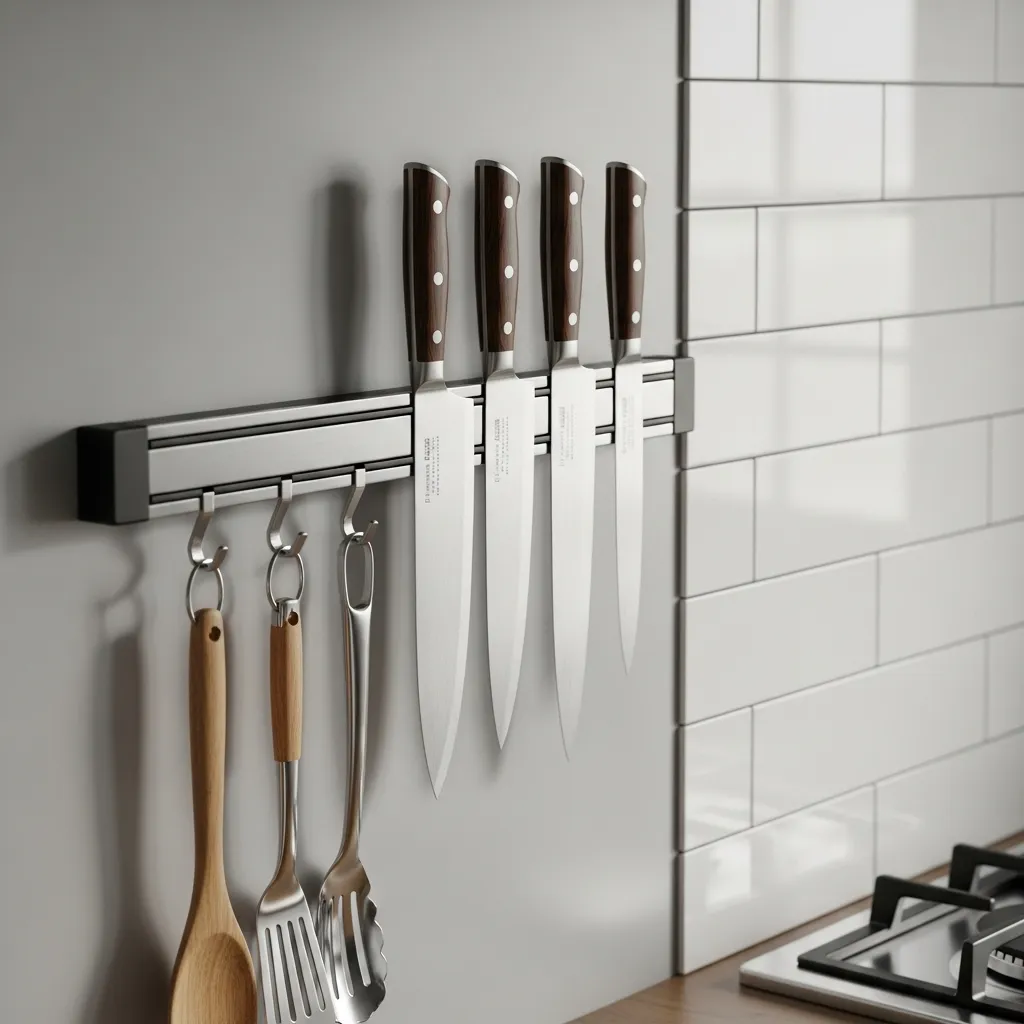
Mounting knives and utensils on the wall instead of keeping them in drawers or a counter block freed up so much space in my kitchen that I actually did a little happy dance when I first installed it. It sounds dramatic, but when you’re working with limited drawer space, finding a home for your kitchen tools can feel like an impossible puzzle. Magnetic strips are brilliant because they keep your knives visible and easily accessible while taking up exactly zero counter or drawer real estate—they’re just hanging there on the wall, looking sleek and professional.
I initially just got a magnetic strip for knives, but then I discovered these magnetic bars and hooks that can hold all sorts of metal utensils too, and now half my cooking tools live on the wall beside my stove. Metal measuring spoons, scissors, even my pizza cutter—anything with some metal on it can hang there, and it’s so convenient to just grab what I need while I’m cooking without digging through a crammed utensil drawer. The visual aspect is nice too; there’s something about a well-organized knife strip that makes a kitchen feel more serious and chef-like, even if you’re just making scrambled eggs for dinner.
4. Over-the-Sink Cutting Board
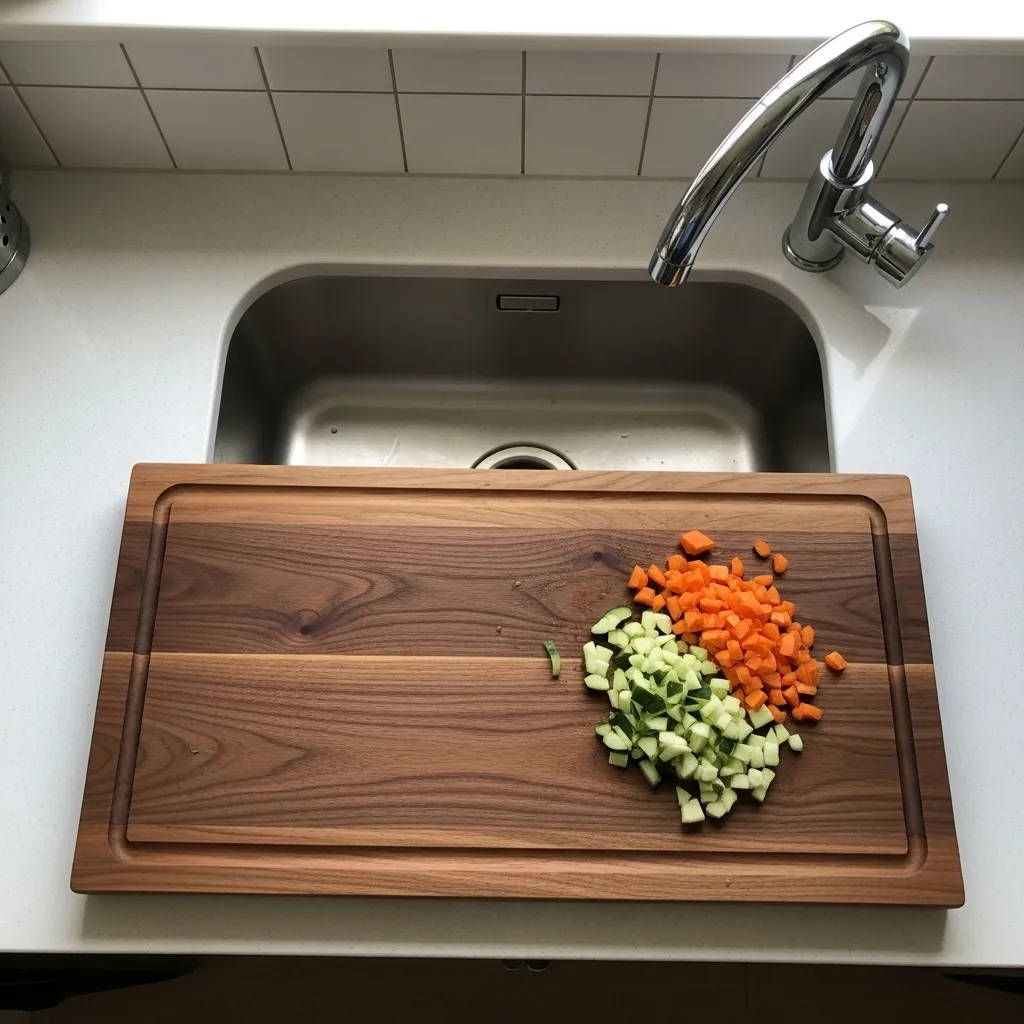
When I first heard about cutting boards designed to fit over your sink, I thought it sounded gimmicky, but then I actually tried one and realized it’s genuinely genius for tiny kitchens with almost no counter space. Essentially, you’re creating a prep surface that didn’t exist before, right over an area that’s usually just empty air when you’re not actively using the sink. I can chop vegetables over the sink, and any scraps or water just fall right down into the basin—it makes cleanup easier and gives me a solid two feet of workspace that I otherwise wouldn’t have.
The key is getting one that fits your sink dimensions properly so it sits securely without wobbling around while you’re working on it. I went with a nice wooden one that matches my aesthetic, but there are also bamboo and plastic options depending on your style and budget. When I’m not using it as a cutting surface, I sometimes leave it over the sink with a dish drying rack on top, or I store it vertically in that slim gap between my fridge and the wall. It’s one of those simple solutions that makes you wonder why all small kitchens don’t come with one automatically—it just makes so much sense when every inch counts.
5. Pegboard Wall Organization
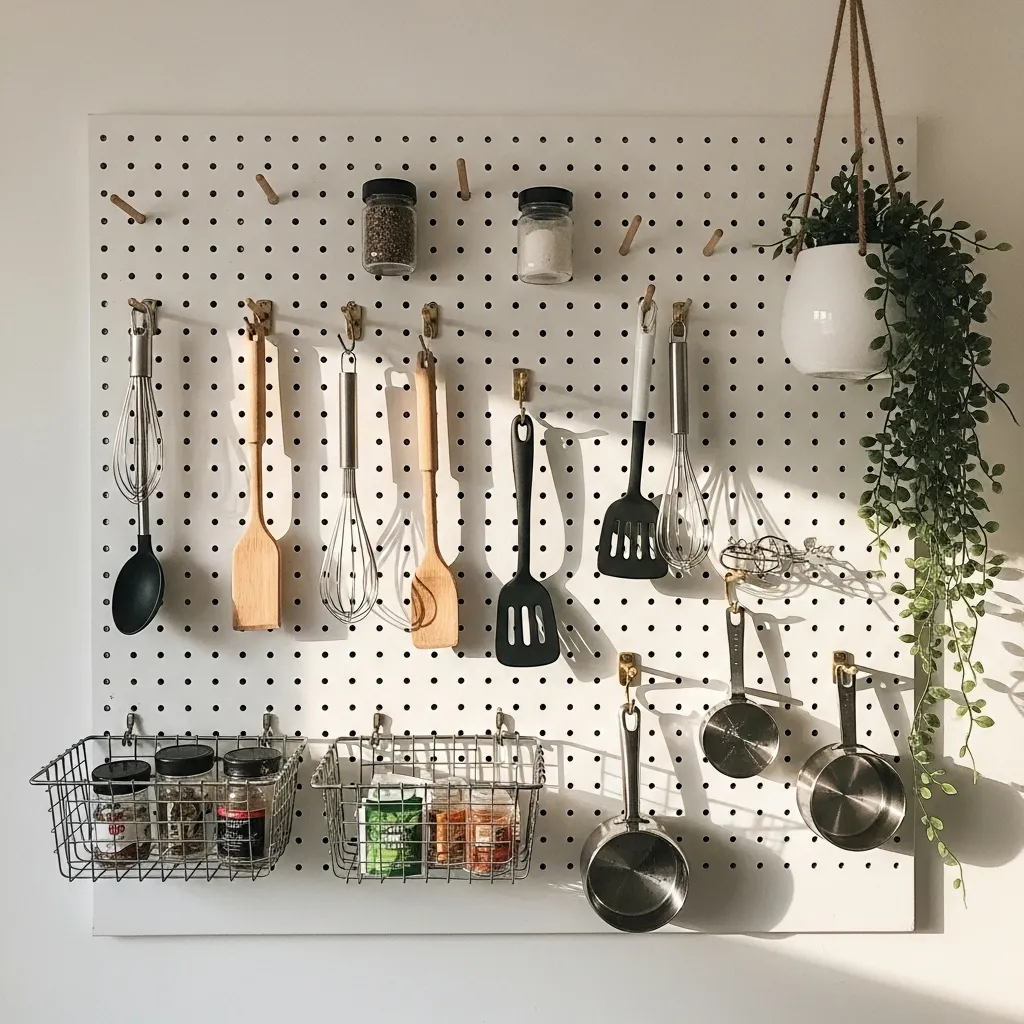
Pegboard isn’t just for garages and craft rooms—it’s actually become one of my favorite solutions for apartment kitchen organization because you can customize it exactly how you need it. The beauty of a pegboard system is that nothing is permanent; if something isn’t working or you get a new kitchen tool that needs a home, you just move the hooks and baskets around until everything fits perfectly. I painted mine a soft cream color to match my kitchen walls, but I’ve seen people do bold accent colors or even leave them natural wood, and they all look amazing.
What I love most about pegboard is how it turns functional storage into something that’s actually decorative and adds personality to your kitchen. My cooking utensils, measuring cups, and even some small pots and pans hang there, and instead of looking cluttered, it creates this interesting visual display that makes the kitchen feel more alive and creative. You can find pegboard at any hardware store super affordably, and the accessories—hooks, baskets, shelves—give you endless options for what and how you want to hang things. I added a few small plants and a cute vintage grater I never actually use but love looking at, and suddenly my pegboard became one of my favorite parts of my kitchen.
6. Fold-Down Wall-Mounted Table
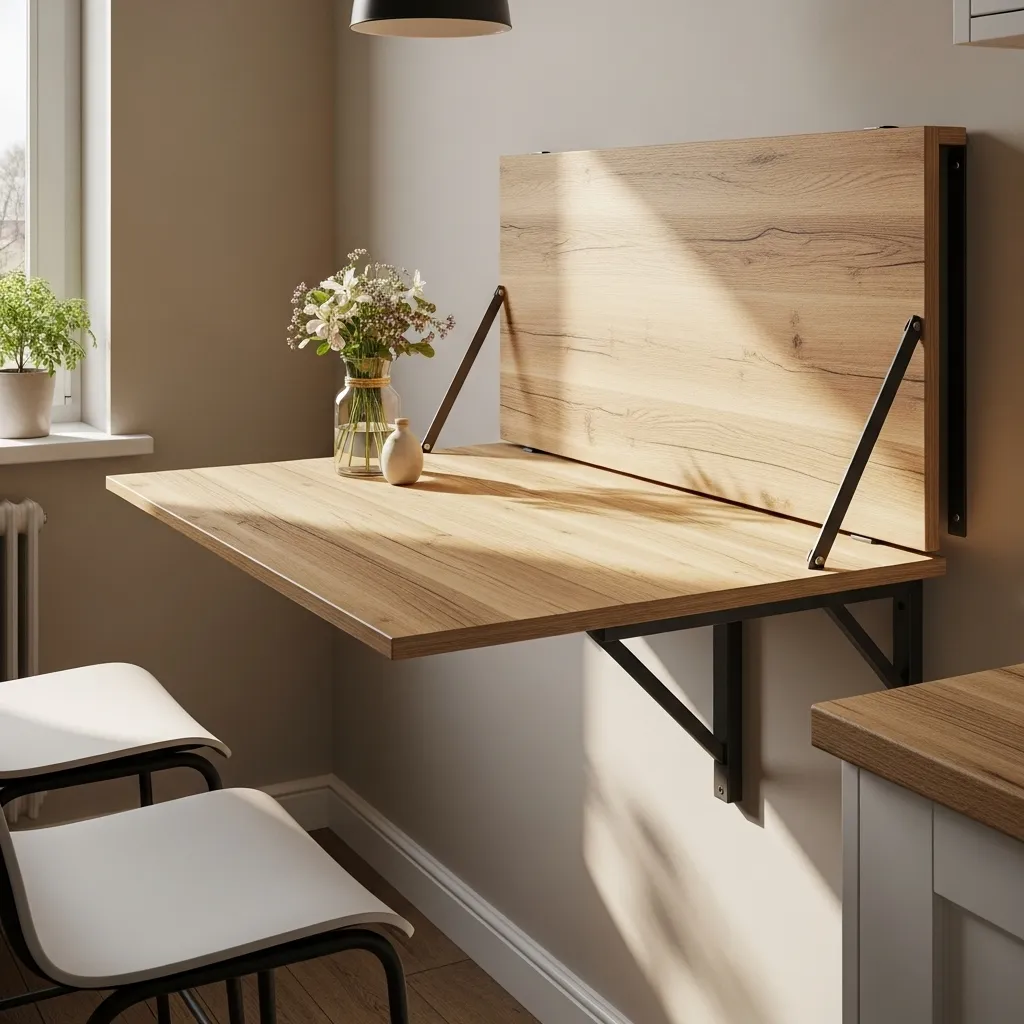
A fold-down table was something I resisted for a long time because I thought it would look too industrial or temporary, but finding the right one completely changed my mind—now I genuinely can’t imagine my small kitchen without it. When it’s folded up against the wall, you’d barely notice it’s there; it’s just a slim wooden panel that almost looks like art or a decorative element. But when I need extra prep space for cooking, or when I want to sit down with my morning coffee and laptop, I simply fold it down and suddenly I have a proper table that’s sturdy enough for anything.
The installation was easier than I expected, and most hardware stores or online retailers sell kits specifically designed for this purpose with all the brackets and mounting hardware included. I positioned mine at a height that works both as a standing prep counter and as a seated dining table depending on what kind of chairs or stools I use. Some mornings I eat breakfast there with the table down, and then I fold it back up before work to reclaim the floor space. It’s perfect for small gatherings too—I can set out appetizers or drinks on it during parties, then fold it away when people start mingling and we need the room to move around.
7. Tension Rod Storage Under the Sink
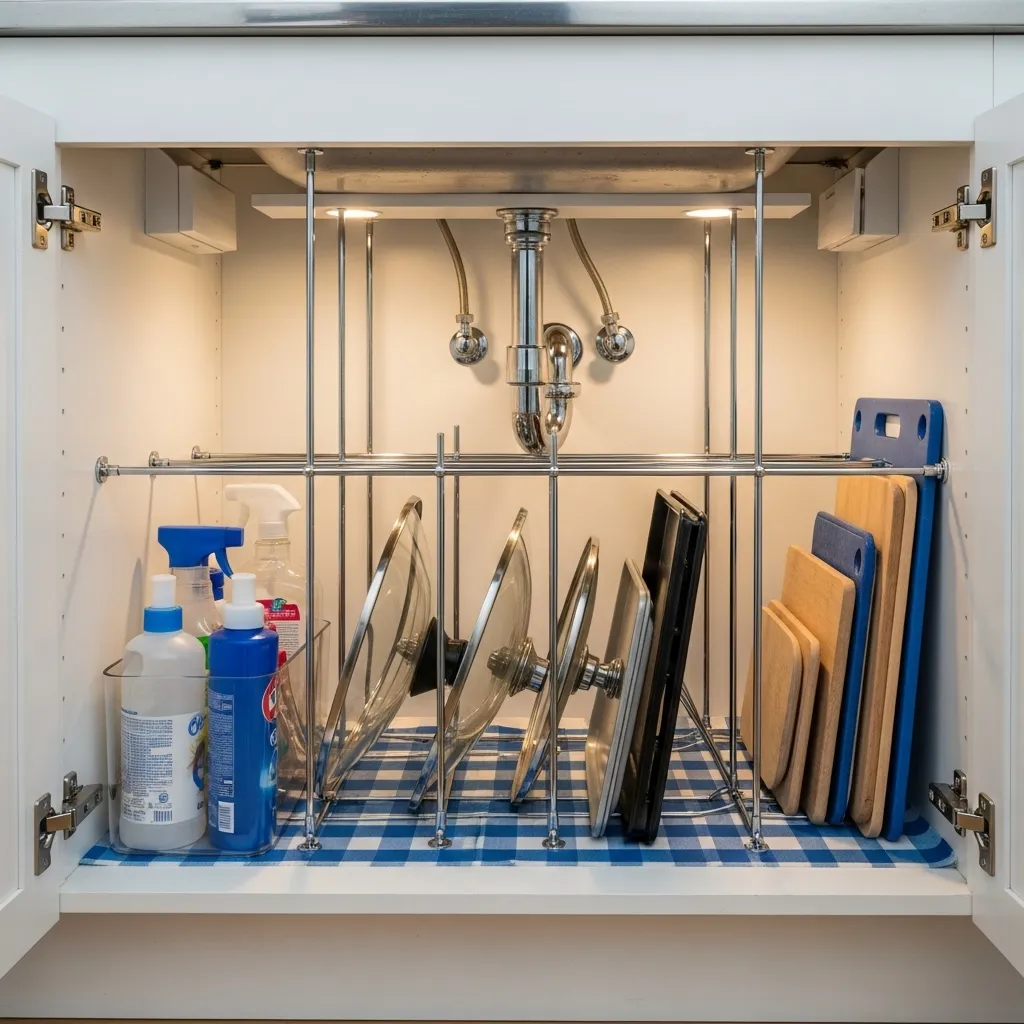
The space under the sink is usually such a disaster zone—it’s like things go in there and multiply into chaos—but using tension rods to create dividers and organization has completely transformed that cabinet for me. I installed a couple of tension rods vertically, and now I can store baking sheets, cutting boards, and pot lids standing upright instead of stacked in a precarious pile that crashes down every time I open the cabinet. It keeps everything visible and accessible, and I actually know what I have under there now instead of just avoiding that cabinet entirely.
You can get spring-loaded tension rods at any dollar store or home goods shop, and they require zero tools or permanent installation—you just twist them to the right length and they hold themselves in place with pressure. I used two rods to create three sections: one for flat baking sheets and cutting boards, one for pot lids (which previously lived in a jumbled pile), and one for cleaning supplies and dish soap bottles. The whole setup took maybe ten minutes and cost less than five dollars, but it’s made such a massive difference in how functional that space is. Every time I open that cabinet and everything is still neatly in place, I feel a little rush of satisfaction.
8. Stackable Wire Baskets for Produce
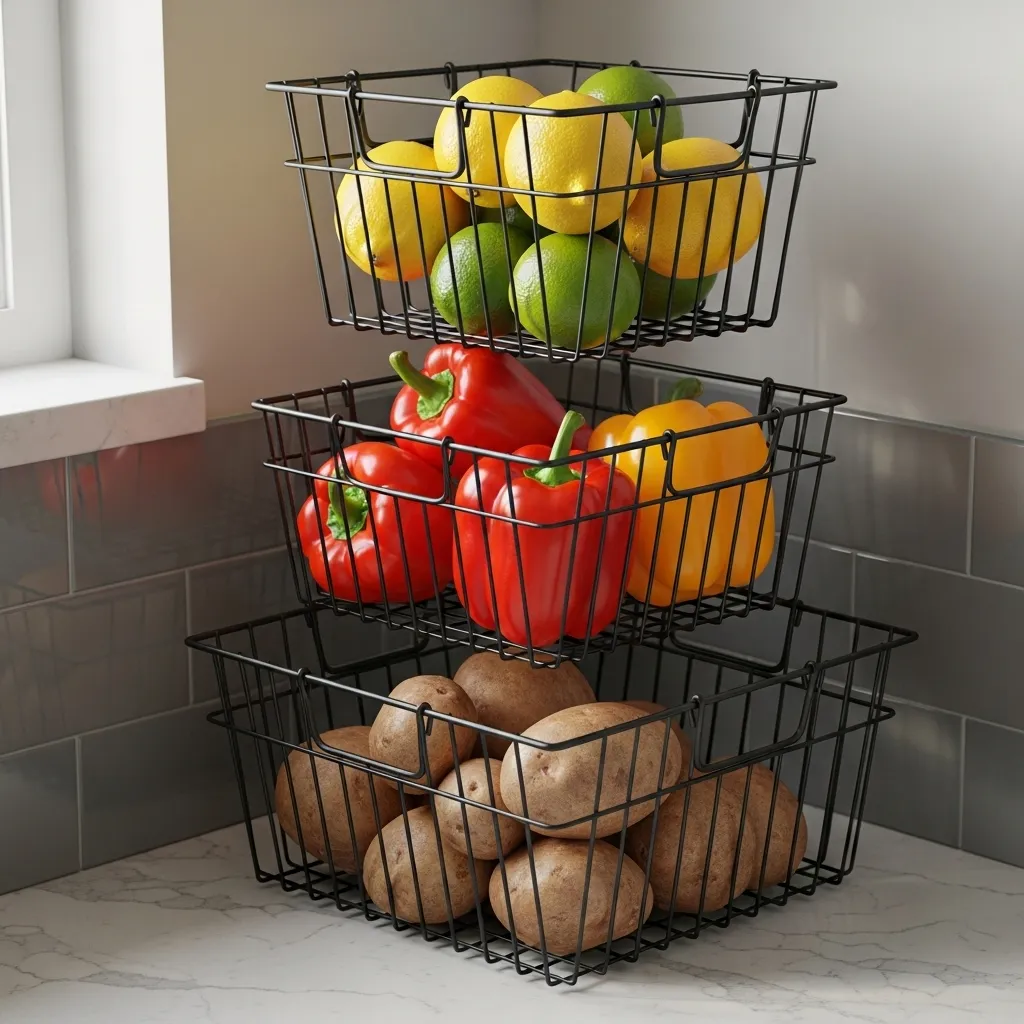
Vertical storage is your best friend in a small kitchen, and stackable wire baskets have been my solution for keeping produce accessible without taking up valuable counter or cabinet space. I keep my baskets in a corner of the counter that I wasn’t really using effectively anyway, and now that whole corner is a dedicated produce station that’s both functional and honestly kind of pretty to look at. The wire construction means air can circulate around the fruits and vegetables, which helps them last longer than if they were trapped in a drawer or plastic bag somewhere.
I use my top basket for citrus and smaller items like garlic and ginger, the middle one for things like apples and tomatoes that I want to grab easily for snacking, and the bottom basket for potatoes, onions, and anything bulkier. The stackable design means you can start with two baskets and add more if you need them, or remove one if you’re not using it—it’s completely flexible based on how much produce you typically keep on hand. Mine are black wire which looks modern and clean, but they come in copper, white, chrome, all sorts of finishes to match whatever vibe your kitchen has going on. Plus, being able to see everything at a glance means I’m much less likely to forget about that bell pepper hiding in the back of the fridge.
9. Mirrored or Glossy Backsplash
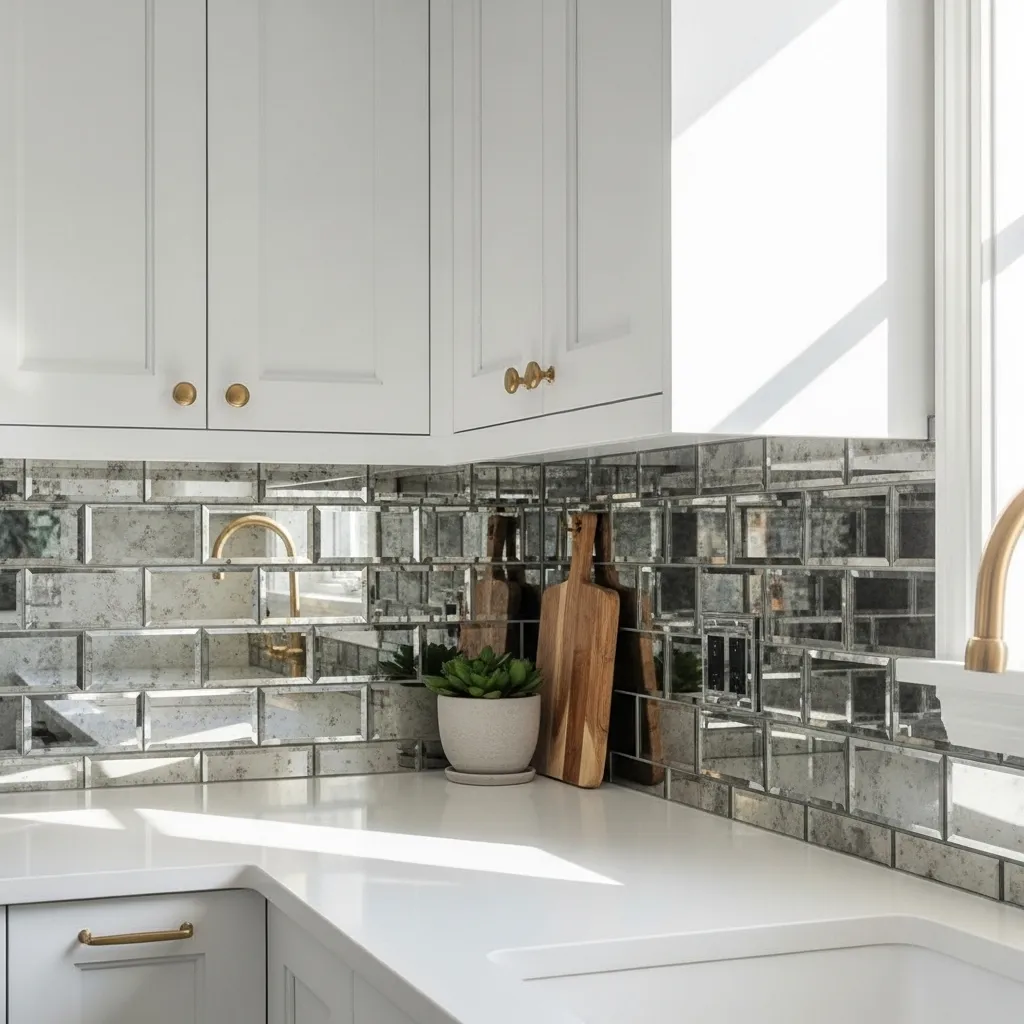
Installing a mirrored or high-gloss backsplash in my tiny kitchen was one of those changes that literally made me gasp when I saw the final result—the way it bounces light around and makes the space feel twice as big is almost magical. I went with mirrored subway tiles because I loved the classic shape but wanted that reflective quality, and the installation wasn’t any harder than regular tile. The difference in how the kitchen feels is remarkable; what used to be a dark, cramped cooking space now feels bright and open, especially in the morning when sunlight streams in and multiplies across all those reflective surfaces.
I know some people worry that a mirrored backsplash will show every single splatter and fingerprint, and while yes, it does need to be wiped down regularly, I honestly don’t find it any more maintenance than a regular tile backsplash that shows water spots and grease. A quick wipe with glass cleaner after cooking keeps it sparkling, and the visual payoff is so worth the minimal extra effort. If full mirror feels too bold for you, consider high-gloss tiles in white or a light color—you’ll still get that light-reflecting quality without the full mirror effect. It’s one of those design tricks that interior designers use in small spaces all the time because it genuinely works to make rooms feel larger and brighter.
10. Hanging Pot Rack from the Ceiling
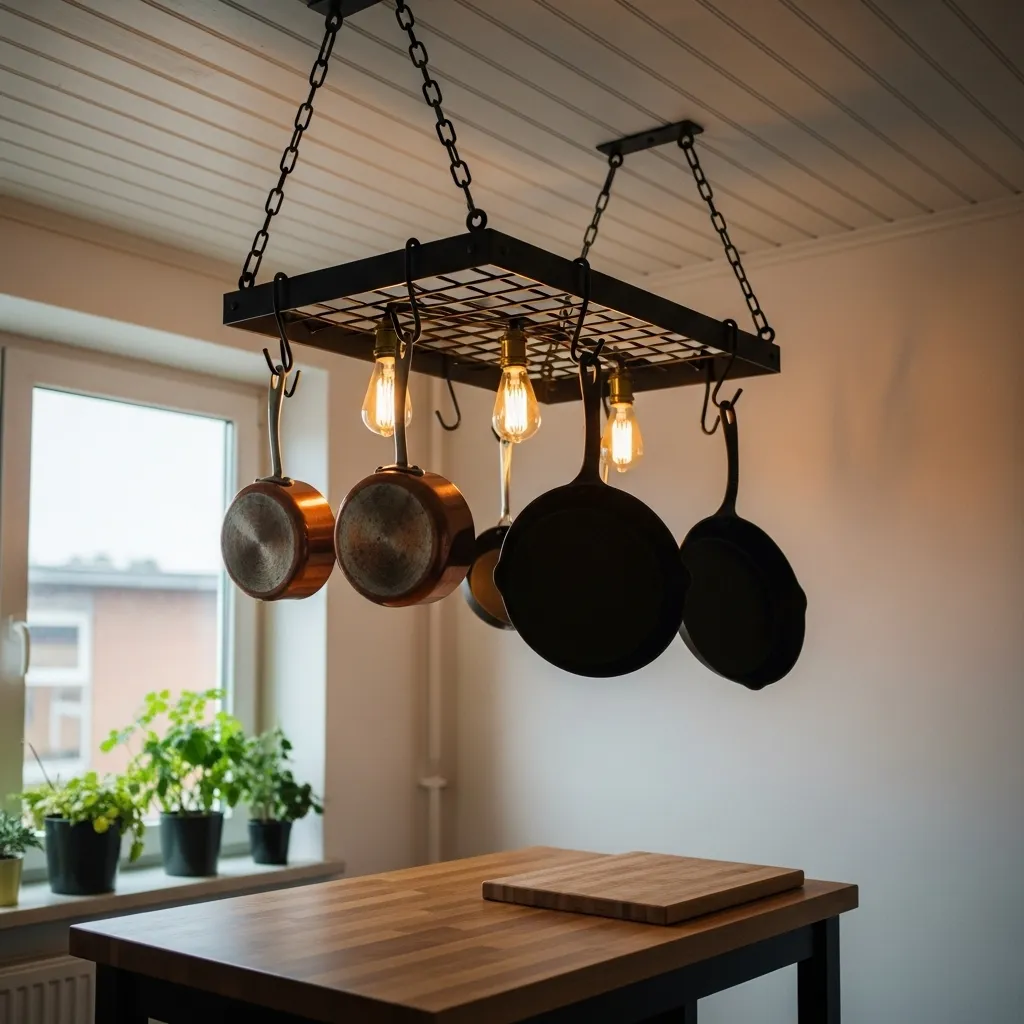
When I first suggested installing a ceiling pot rack in my apartment, my partner thought I was joking because the kitchen was already so small—but that’s exactly why it’s perfect. Instead of taking up precious cabinet space with bulky pots and pans, they hang overhead where there’s usually just wasted vertical space. I only keep the pots and pans I actually use regularly on the rack (maybe six or seven pieces), and they’re right there whenever I need them, plus the copper bottoms and cast iron catch the light and add this warm, lived-in character to the kitchen.
You do need to make sure you install it into ceiling joists or use the proper anchors so it’s secure—this isn’t something you want crashing down—but once it’s up there, it’s incredibly sturdy and functional. I positioned mine over my small island so the pots hang above the workspace where I’m most likely to grab them, and it actually defines that area as the cooking zone in a way that feels intentional. Some people worry about pots hanging from the ceiling looking cluttered or restaurant-like, but I think if you keep it to your most-used, best-looking cookware, it adds so much charm and makes your kitchen feel more like a serious cooking space.
11. Slide-Out Cabinet Organizers
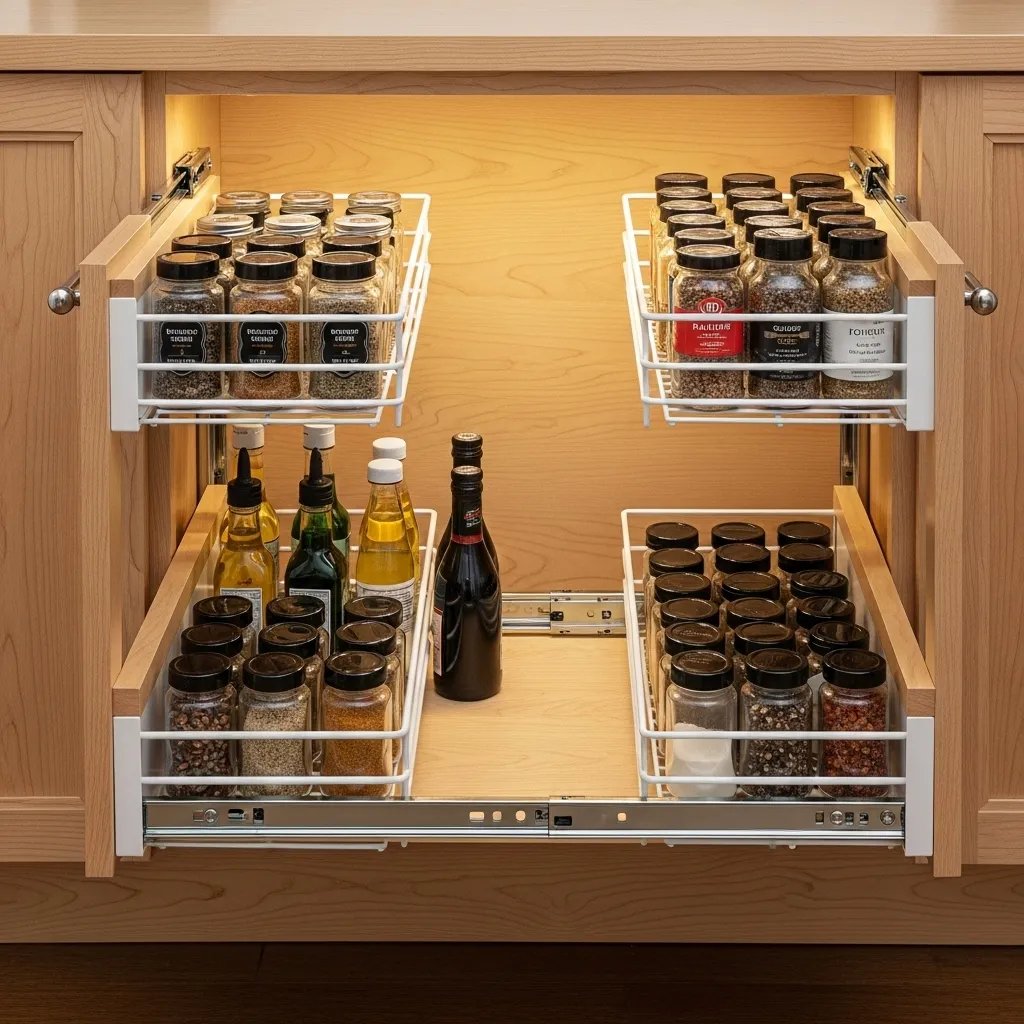
Pull-out cabinet organizers are one of those upgrades that seems small but makes such a massive difference in how functional your kitchen storage actually is—especially in a small space where you can’t afford to waste an inch. I installed slide-out drawers in my lower cabinets, and suddenly those deep, dark caves where things used to disappear forever became accessible, usable storage where I can see everything at a glance. No more getting on my hands and knees to dig around in the back of the cabinet for that one pot I need; everything just slides out smoothly and is right there.
The installation is pretty straightforward if you’re even slightly handy—most come with detailed instructions and all the hardware you need—but you can also hire someone to do it if that’s not your thing. I put a double-tier slide-out in my spice cabinet, and it’s been absolutely life-changing for cooking; I can pull out the drawer, see all my spices at once across two levels, and grab exactly what I need without knocking over five other bottles. The same system works great for storing canned goods, baking supplies, or even pots and pans. It’s definitely a bit of an investment compared to some of the other ideas on this list, but in terms of maximizing every cubic inch of storage space you have, it’s hard to beat.
12. Drawer Dividers and Organizers
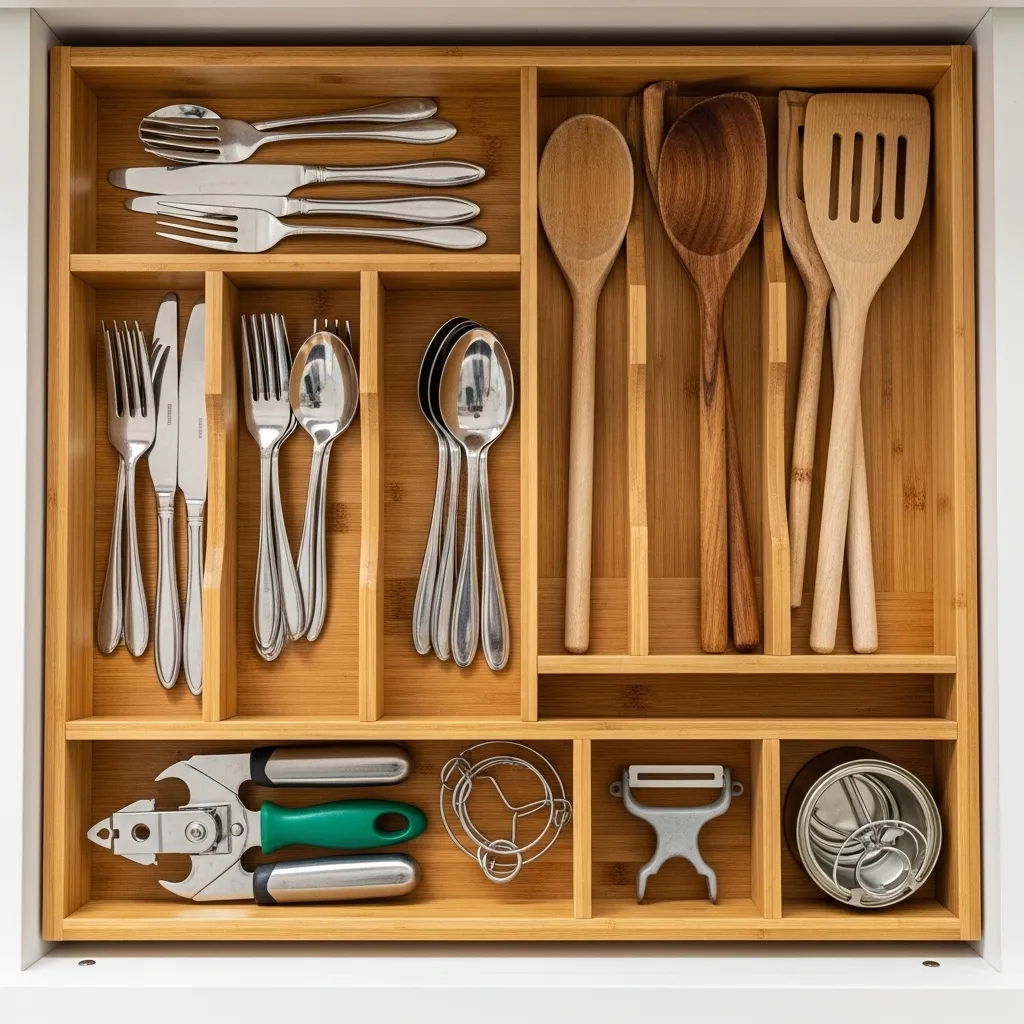
I used to have that one kitchen drawer that was basically a black hole of random utensils, gadgets, and mystery items tangled together—you know the one I’m talking about—but getting proper drawer dividers changed everything. Now every single item has a designated spot, and when I open my utensil drawer, I can find exactly what I need in two seconds instead of pawning through a chaotic pile of stuff. In a small kitchen where you don’t have endless drawers to waste, making each drawer work efficiently is crucial, and dividers are the secret to actually achieving that.
You can go the custom route with adjustable dividers that you cut to fit your exact drawer dimensions, or there are tons of pre-made organizer inserts in standard sizes that work great too. I have bamboo dividers in my utensil drawer, plastic adjustable ones in my junk drawer (which is now actually organized enough that it doesn’t really deserve the name “junk drawer” anymore), and deeper compartments in my cooking tools drawer for things like whisks and spatulas. The whole transformation took maybe an hour and didn’t cost much at all, but the daily impact has been huge—it’s one of those changes you don’t fully appreciate until you have it, and then you can’t imagine going back to the old chaotic way.
13. Light Colors and Reflective Surfaces
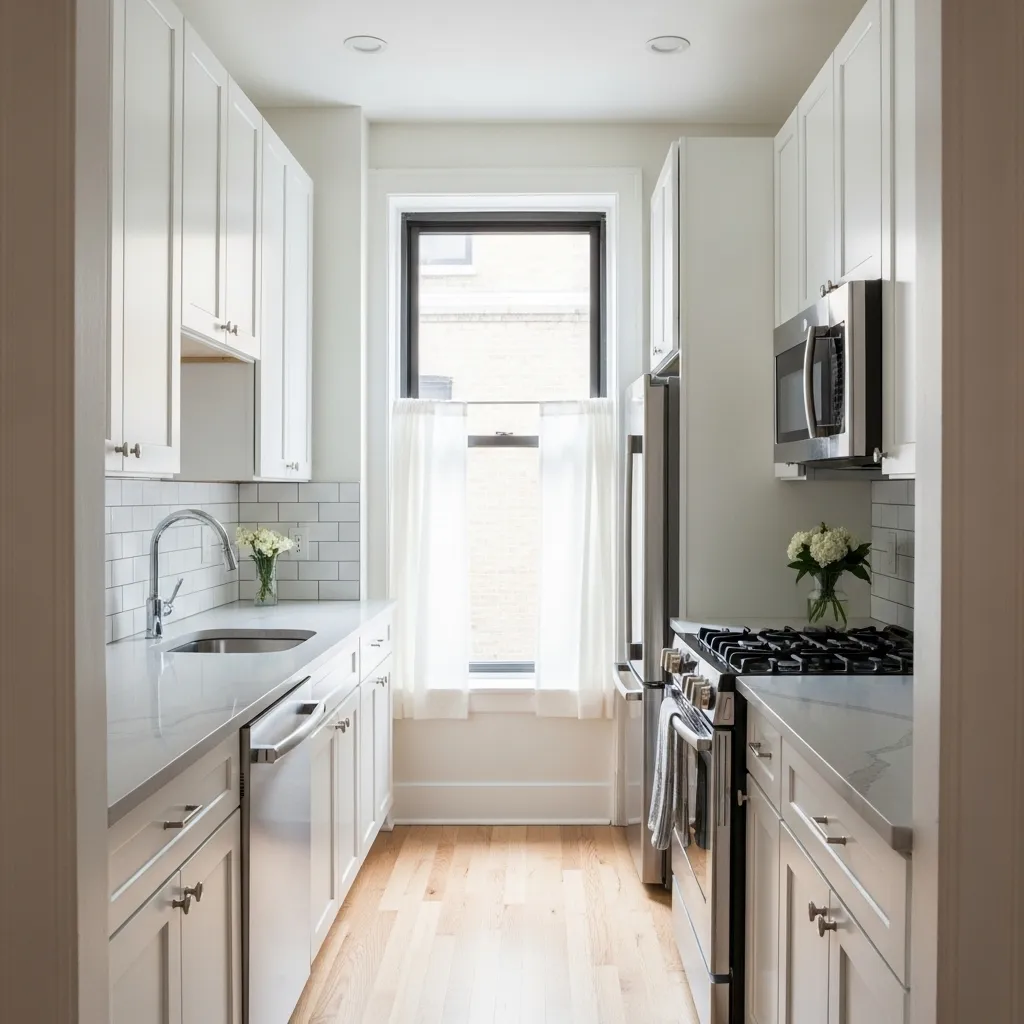
Painting my kitchen cabinets white and choosing light, reflective surfaces for everything was probably the single biggest visual transformation I’ve made in any small apartment kitchen I’ve lived in. Dark colors can look sophisticated and moody in a large kitchen with tons of natural light, but in a small, enclosed space they tend to make everything feel even more cramped and cave-like. Light colors—whites, creams, soft grays—reflect whatever natural light you do have and bounce it around the room, making the whole space feel more open and breathable.
I went with white cabinets, a glossy white subway tile backsplash, and light gray countertops, and the difference was dramatic; the kitchen genuinely feels about thirty percent larger than it did with the old dark wood cabinets that were there before. The glossy backsplash tiles add that reflective quality that enhances the effect even more. Even small touches like choosing stainless steel or glass instead of dark pottery for containers and displays contributes to that bright, open feeling. It’s not about making everything sterile or cold—you can still add warmth with wood cutting boards, brass hardware, plants, and textiles—but keeping the foundational elements light creates a canvas that makes the whole space feel bigger.
14. Under-Cabinet Lighting
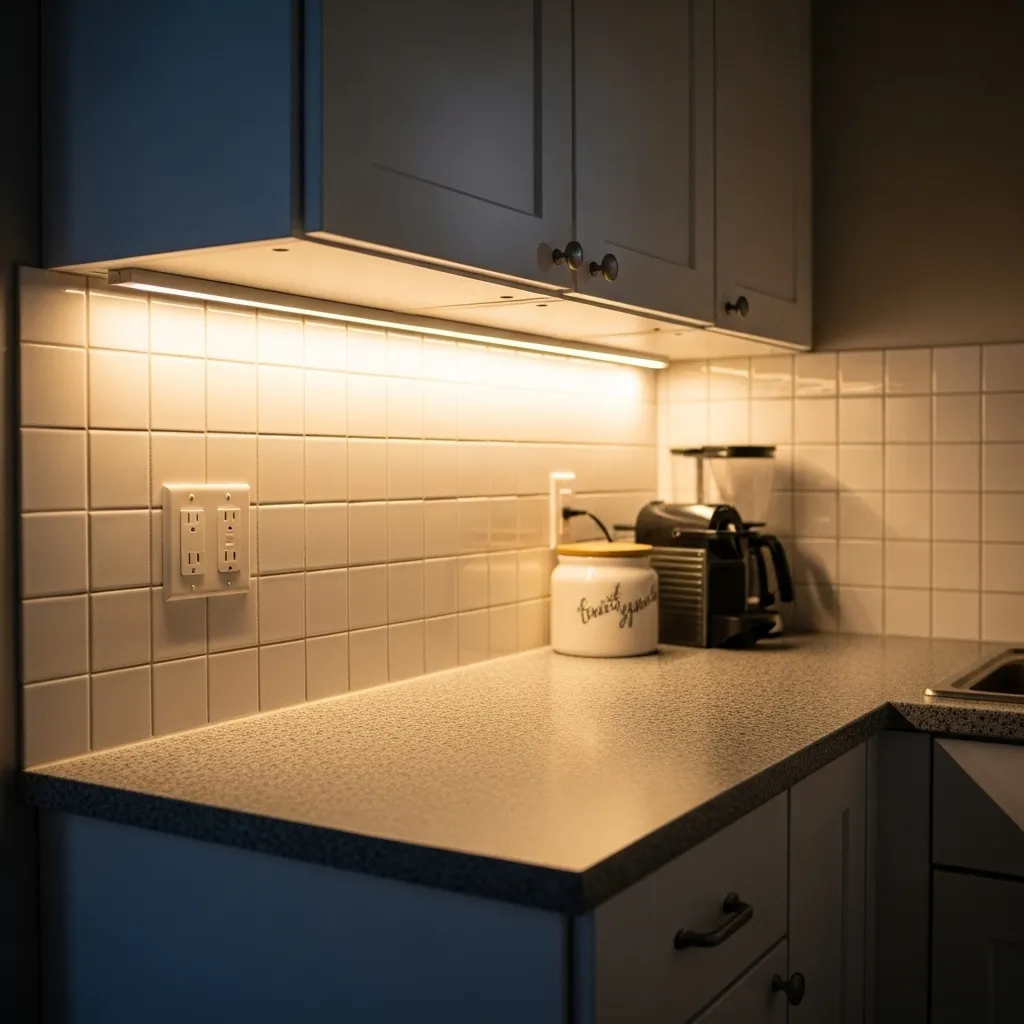
Under-cabinet lighting is one of those upgrades that seems purely aesthetic until you actually have it, and then you realize how much it improves the functionality of your kitchen workspace too. I installed LED strip lights under my upper cabinets, and now when I’m prepping dinner in the evening, I’m not constantly standing in my own shadow trying to chop vegetables in the dark. The light shines directly down onto the counter where you’re actually working, and it makes such a difference for tasks that require any kind of precision or just generally being able to see what you’re doing.
Beyond the practical benefits, under-cabinet lighting also adds this warm, welcoming ambiance to the kitchen that makes it feel more finished and intentional. I love coming home in the evening and just turning on the under-cabinet lights instead of the harsh overhead ones—it creates this cozy glow that makes the kitchen feel less utilitarian and more like a space I actually want to spend time in. The installation is surprisingly easy; most LED strips are plug-in or battery-operated now, so you don’t need to hire an electrician or do any complicated wiring. I went with warm white LEDs because I wanted that soft, inviting light rather than the cool blue-toned ones that feel more clinical, and I’m so happy with how it turned out.
15. Compact Dish Drying Rack with Storage
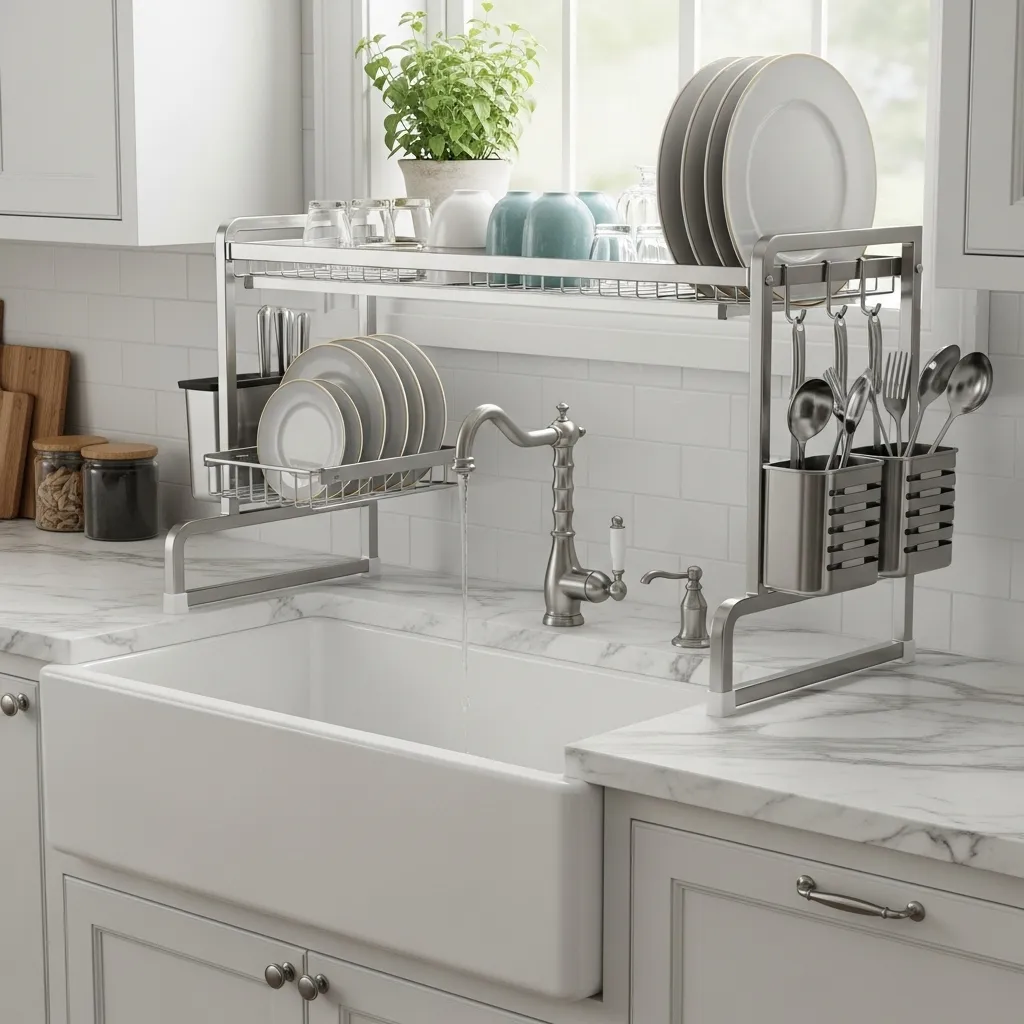
An over-the-sink drying rack has been an absolute essential in every small apartment kitchen I’ve had because it solves one of the biggest space problems: where to put wet dishes when you have basically no counter space to spare. Traditional dish racks take up a huge amount of valuable counter real estate that you desperately need for prep work, but an over-the-sink rack uses that vertical space above the sink that’s usually just sitting there empty. The dishes drip directly into the sink instead of onto your counter, and you’re not sacrificing any workspace to let things air dry.
I resisted getting one for a while because I thought it would look too cluttered or busy, but finding the right style made all the difference—the sleek stainless steel one I ended up with actually looks modern and intentional rather than college-dorm-temporary. Some models have multiple tiers and even include space for utensils, cutting boards, and dish soap, basically creating a whole dish station that lives above your sink. When everything’s dry, I either put it away or sometimes leave a few everyday items there since they’re going to be used again soon anyway. It’s one of those practical solutions that just makes daily life in a small kitchen so much easier.